The El Salvador Flag: Colors, Meaning, and Central American Pride
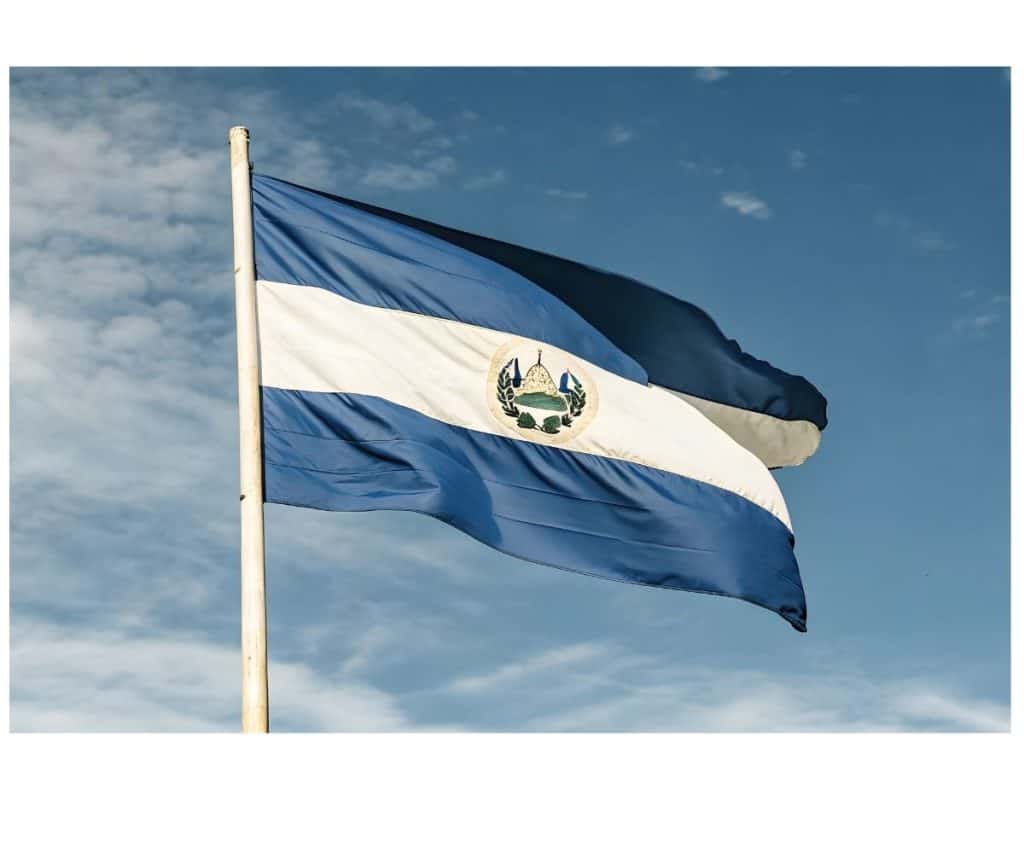
Have you ever noticed how similar many Central American flags look? The El Salvador flag, or bandera as locals call it, is a beautiful example of this shared history. With its bold blue and white stripes and national coat of arms, it tells a story of independence, unity, and the natural beauty that Oscar and I have come to love about this country.
What the El Salvador Flag Looks Like
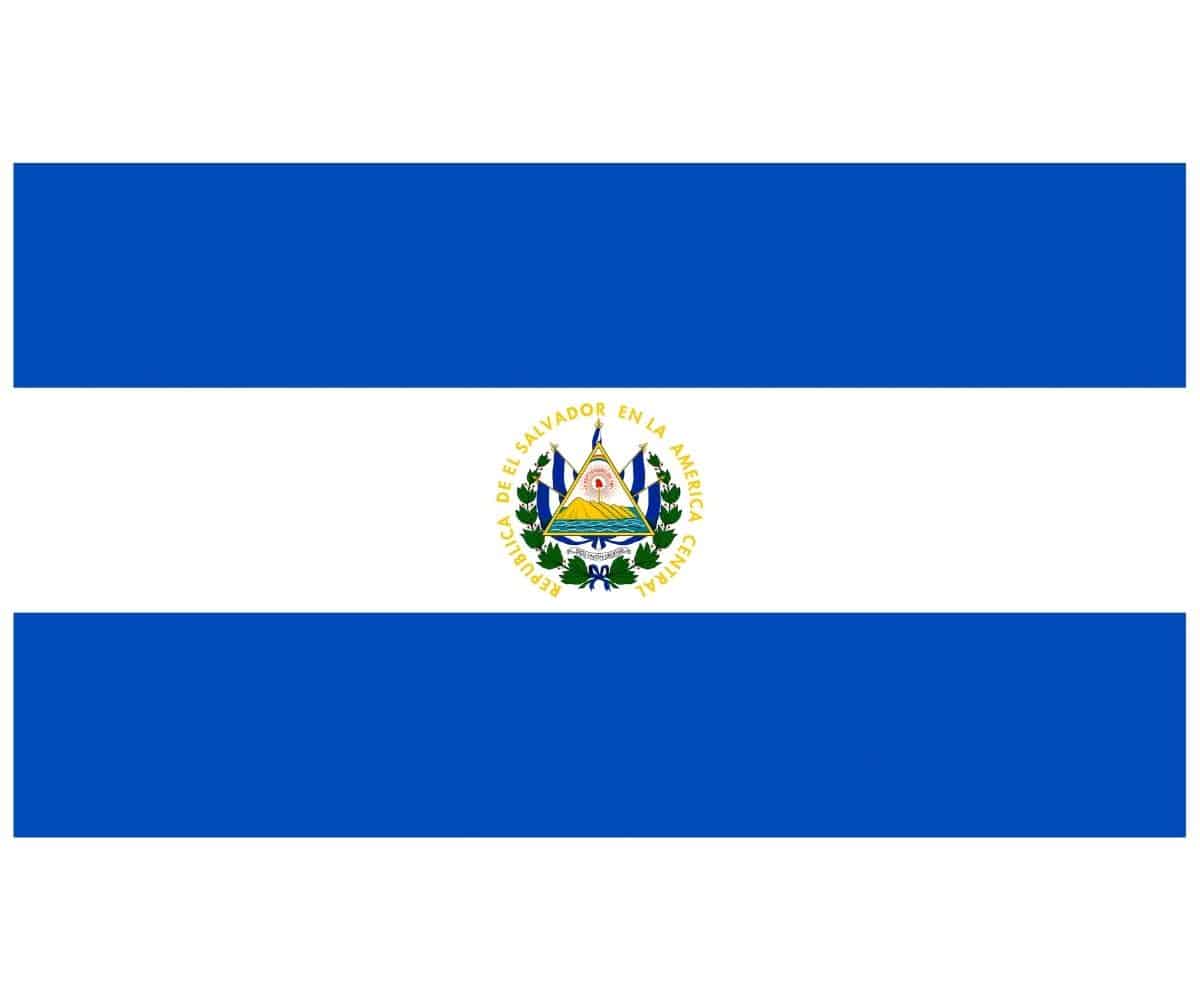
The El Salvador flag features three horizontal stripes:
– Two cobalt blue bands on the top and bottom, with a white stripe in the middle.
In the center, you’ll find the…
– national coat of arms
– a triangle surrounded by five volcanoes
– a rainbow
– a red Phrygian cap (a symbol of freedom), and
– the national motto “Dios, Unión, Libertad” (God, Union, Liberty)
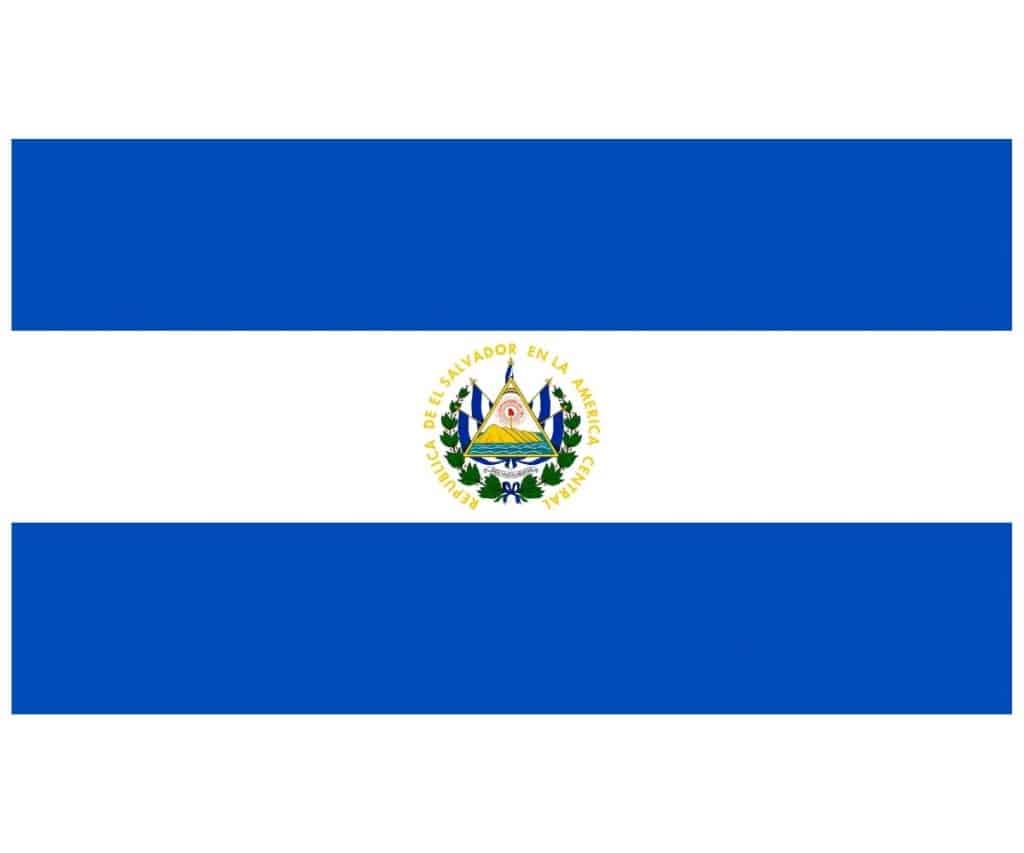
The flag colors aren’t just beautiful, they carry deep meaning:
- Blue represents the sky and the two oceans surrounding Central America (the Pacific and Atlantic)
- White symbolizes peace, solidarity, and harmony among the people
Why Does It Look Like Other Central American Flags?
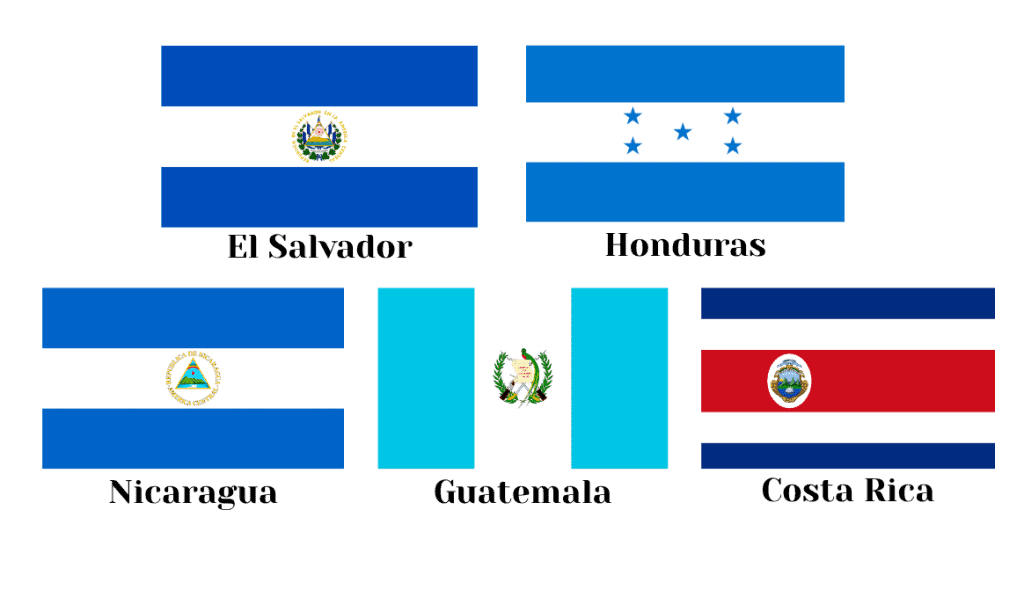
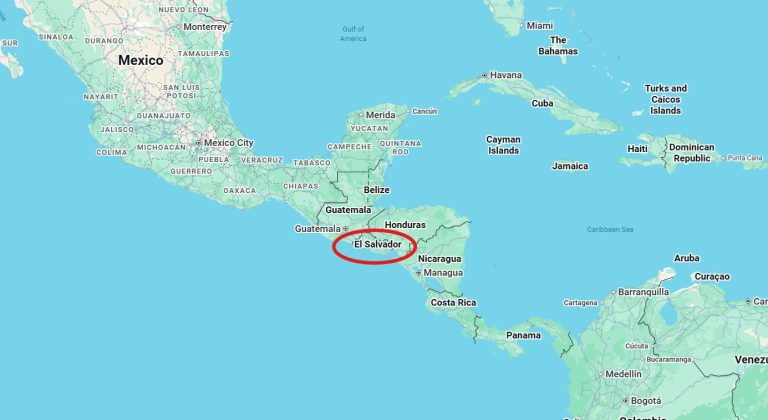
Here’s something fascinating: the flags of El Salvador, Honduras, Nicaragua, Guatemala, and Costa Rica all share similar blue and white designs. This isn’t a coincidence, it’s a tribute to their shared past.
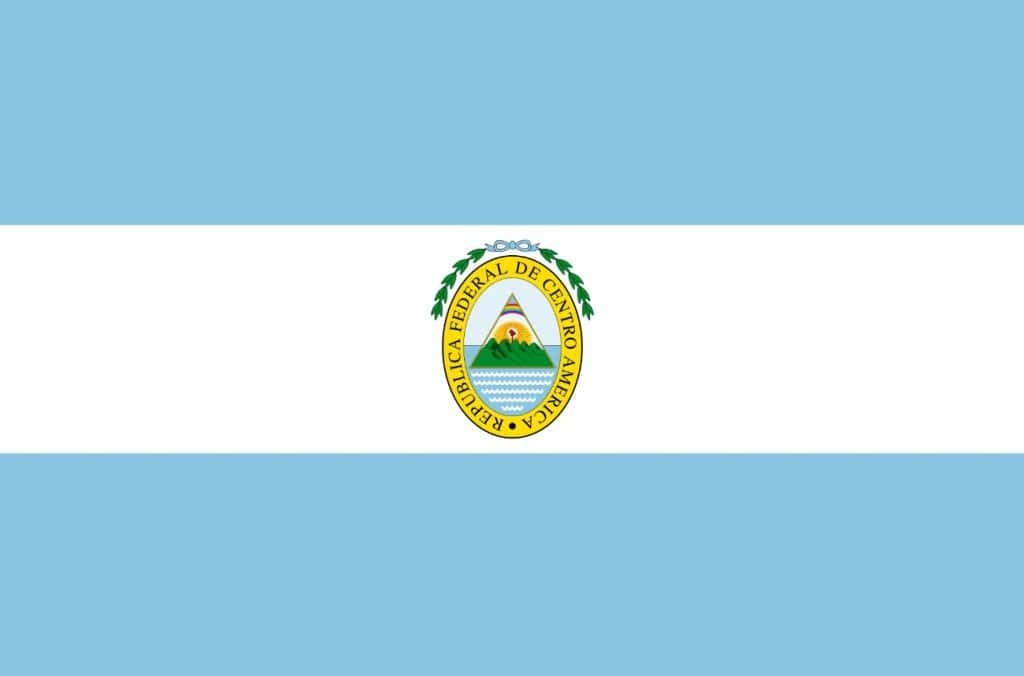
All five countries were once part of the Federal Republic of Central America (1823-1841), a short-lived union that dreamed of a united Central America after gaining independence from Spain. The original flag of that federation featured blue and white horizontal stripes, and even after the union dissolved, each nation kept variations of those colors as a symbol of their common roots and shared hopes for peace and prosperity.
Key similarities include:
- Blue and white color schemes across all five nations
- Horizontal stripe patterns (though some, like Guatemala and Costa Rica, use vertical stripes)
- Symbols representing unity, freedom, and Central American geography
Our Take on the Salvadoran Bandera
Every time Oscar and I see the Salvadoran flag waving, whether it’s in a small mountain town or along the coast, we’re reminded of the pride Salvadorans have for their country. It’s more than just a flag; it’s a symbol of resilience, shared identity, and hope.
If you’re visiting El Salvador, keep an eye out for the bandera during national celebrations like Independence Day (September 15). The streets come alive with parades, music, and a sea of blue and white that connects this small nation to its neighbors and its history.