El Salvador Population in 2026: History, Immigration & Growth Trends
If you’re planning a trip or thinking about living abroad, understanding the El Salvador population helps you better understand the country itself, its energy, its history, and its resilience.
If El Salvador is the smallest country in the Americas “How many people live in El Salvador?” Let’s learn the number and the history behind that number. From civil war to immigration waves and natural disasters, El Salvador’s population tells a powerful story of change.
What Is the El Salvador Population in 2026?
As of 2026, the El Salvador population is estimated at about 6.3 million people, according to data from the World Bank and the United Nations.
Despite being the smallest country in Central America, El Salvador is one of the most densely populated.
Quick Facts
- Population (2026): ~6.3 million
- Capital: San Salvador
- Urban population: ~73%
- Median age: ~28 years
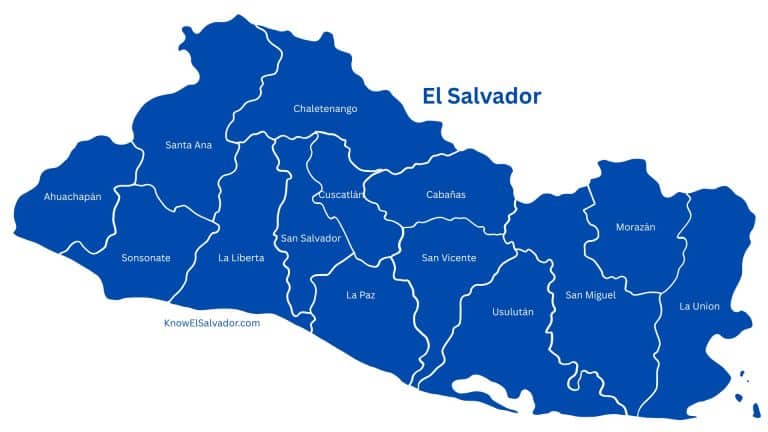
- Major cities: San Salvador, Santa Ana, San Miguel
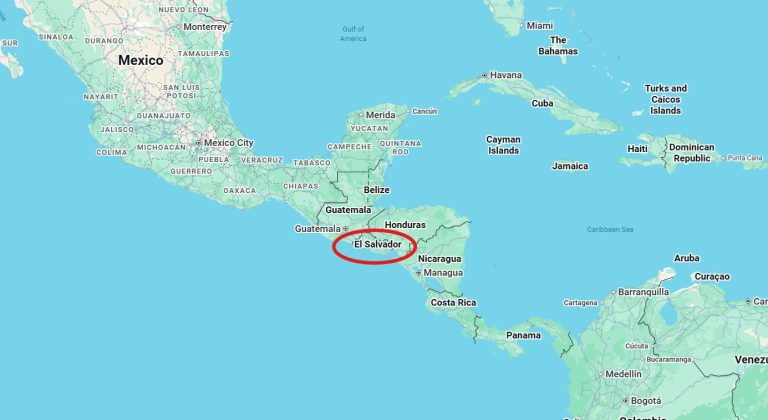
For more country location, see our guide to Where Is El Salvador?
El Salvador Population Growth Since 1970
Below is a 5-year population estimate timeline based on World Bank historical data:
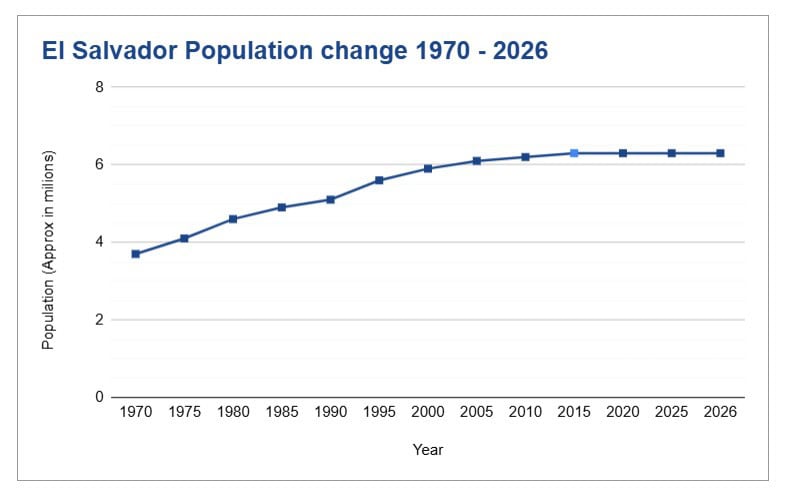
You’ll notice something interesting: strong growth until the 1990s, then a slowdown. Why?
How the Civil War Changed El Salvador’s Population
From 1980 to 1992, El Salvador experienced a devastating civil war. The conflict between the government and the Farabundo Martí National Liberation (FMNL) Front led to:
- Over 75,000 deaths
- Massive internal displacement
- Large-scale emigration
During these years, hundreds of thousands of Salvadorans fled to the United States, Mexico, and neighboring countries. Immigration patterns shifted dramatically, permanently affecting the El Salvador population.
Many Salvadoran families today have relatives abroad because of this period – this is the situation with Oscar’s family that emigrated due to the Civil War conflict.
El Salvador Immigration After the War
Even after peace accords were signed in 1992, immigration continued.
Why Did People Leave?
- Economic instability
- Gang violence
- Limited job opportunities
- Natural disasters
In the early 2000s, gang violence became a major driver of emigration. The rise of MS-13 and Barrio 18 gang groups created major insecurity in communities all through the country, pushing Salvadorian families to seek safety abroad.
At the same time, many Salvadorans were already living in the U.S., creating strong migration networks.
According to the United Nations, more than 2 million Salvadorans live abroad, mostly in the United States.
Natural Disasters and Population Shifts
El Salvador is located in a highly active seismic and volcanic zone. Major events have also shaped population movement:
- 2001 Earthquakes – Over 1,000 deaths and massive housing damage caused by a series of of earthquakes of 6.7 – 7.7 magnitude
- Hurricane Mitch (1998) – Severe flooding and infrastructure loss caused by a Category 5 hurricane with a central pressure of 905 mb!
- Volcanic eruptions and tropical storms
After disasters, temporary and permanent migration often increases, both internally and internationally.
When we visit the rural communities near volcanoes like Santa Ana or Izalco, we’re always reminded how closely people live with nature and how resilient Salvadorans truly are!
Why Has the El Salvador Population Stabilized?
Since around 2010, population growth has slowed due to:
- Lower birth rates
- Continued emigration
- Urbanization
- Aging population trends
Today, most Salvadorans live in urban areas like San Salvador and surrounding municipalities.
In recent years, improved security policies have reduced gang violence, which may influence future migration patterns, but long-term effects are still developing.
Understanding El Salvador Through Its People
The El Salvador population is more than a statistic. It reflects:
- A country shaped by war
- Families connected across borders
- Communities rebuilt after disasters
- A young, resilient generation
When you travel here, you’ll feel it in the bustling markets, the crowded pupuserías, and the warmth of locals who proudly call this small country home.
If you’re curious about safety trends today, we recommend reading our post: Is El Salvador Safe in 2026?.
Final Thoughts
Every time Oscar and I walk through a vibrant plaza in San Salvador or watch families gather by Lake Coatepeque, we’re reminded that population numbers only tell part of the story.
Behind every statistic is a family, a migration story, a fresh start, or a return home.
El Salvador may be small in size, but its story and its people are anything but small!